Reading Guide
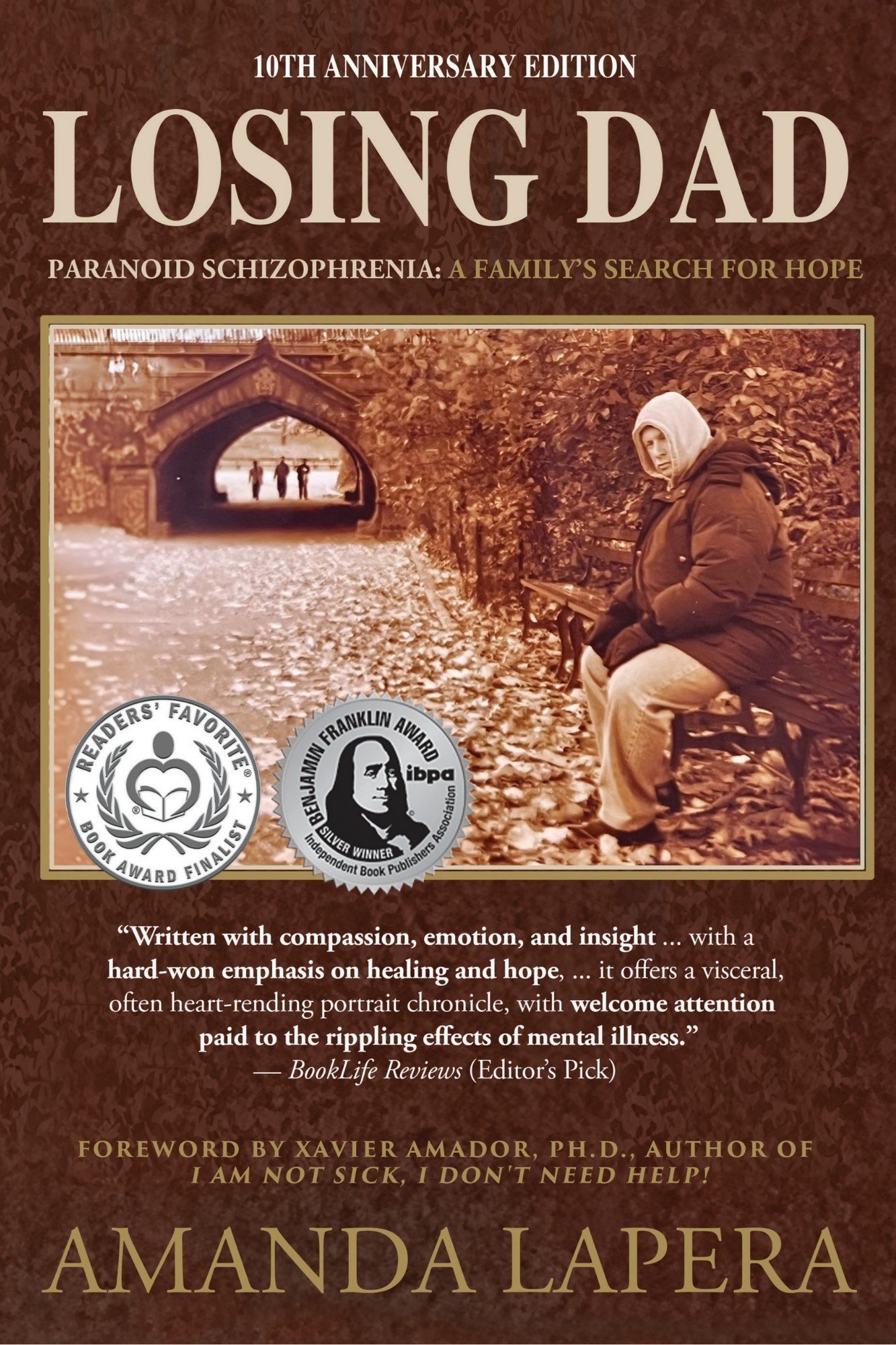
Losing Dad
Psychology Memoir · 10th Anniversary Edition
Reading Guide Questions
- What is the theme of Losing Dad? In what ways can you relate to this story’s message? How might the message be relevant today?
- What may have caused Joseph’s transformation? Explain.
- Is there a right way to deal with mental illness or loss? Evaluate each family member’s reactions. Consider possible cultural bias.
- What part might social stigma have played in the story? Have you been affected by stigma? How might stigma be reduced?
- What role did mental health laws play in the story? What are the laws in your state or country? What, if anything, would you change?
- Anosognosia means lack of insight. If the family members had been aware of Joseph’s anosognosia early on, do you think this story may have ended differently? How so?
- Communication is important in a family. Think about the communication in your family. How well would your family be equipped to handle the onset of a severe mental illness or other tragedy or loss?
- Mental illness is an invisible disease. How can we show empathy for our neighbors, friends, family, and coworkers? For ourselves?
- Joseph’s family would be considered middle-class. How might a person’s socio-economic status affect access to care and outcomes?
- Joseph attempted to die by suicide multiple times. Tragically, suicide is one of the leading causes of death. What are some of the warning signs? What are effective intervention strategies?
- If you were Amanda, Hilda, Jackie, or Keith, how would you feel now? What more could you do for Joseph, each other, or yourself?
- Why do you think doctors and counselors did not help Hilda when she needed it? Are there inequities related to the way healthcare providers and law enforcement treat people based on gender or ethnicity?
- On average, one in five people are affected by mental illness: Anxiety and depression the most common. If you are comfortable sharing, how has mental illness affected your life, if at all?
- This system failed Joseph, a white male. What additional obstacles to accessing care may people from historically marginalized groups face? How can we achieve equitable mental healthcare?
- Research shows that people in the LBGTQ+ community are at higher risk for suicide and mental health issues. Why? What can be done?
- Adverse Childhood Experiences (ACE) affect an individual’s health and well-being. Identify risk factors and possible interventions.
- How does mental illness affect our society? What do you wish you could change? How can we start?
- When a person deals with death, disease, substance abuse, disability, war, trauma, birth, job loss, financial loss, bullying, or harassment, what stages of grief are healthy, or unhealthy, for people to go through? When should someone seek help?
- Healthcare became more difficult when Joseph and Hilda moved from an urban area to a rural community. How can we better meet the needs of people who live in rural communities?
- How do our mental health needs change as we age? How can we combat loneliness in our vulnerable older population?
- What role can religion play to help people with mental illness? How might spiritual leaders make the situation better or worse? How can we tell the difference between religious beliefs and mental illness?
- It’s all in your head. Get over it. Move on. Be more positive. You should be thankful. While resiliency is important, these approaches can be especially harmful for someone dealing with a mental illness. How can we encourage resiliency in the right way?
- People plan for the future with wills, trusts, advanced healthcare directives, medical and financial powers of attorney. But how prepared are you should your mental health decline? What about your spouse? Children? What legal forms are available for you to state your preferences for care should you be unable to do so?
- Caring for a child with a mental illness is difficult. How can we help parents? What steps must be put in place before a child turns eighteen to improve mental healthcare outcomes in adulthood?
- Is there a shortage in mental healthcare providers? If so, what are the causes? What can be done to increase the numbers and access?
- For Joseph’s family, doctors refused to share information about his treatment. Discuss HIPAA guidelines. Why do we have them? How do we balance privacy and the need to include family in a care plan?
- Family members are 24-hour caregivers. How can families work with the healthcare team to improve care? How can we help them?
- When a friend, neighbor, or church member gets ill, or cares for a sick family member, we offer to help. We bring food and run errands. What prevents people from doing the same when it’s a mental illness?
- Is there a cure to mental illness on the horizon? Explain.
- How do you practice self-care? A drowning person can’t save others.
